
No products in the cart.
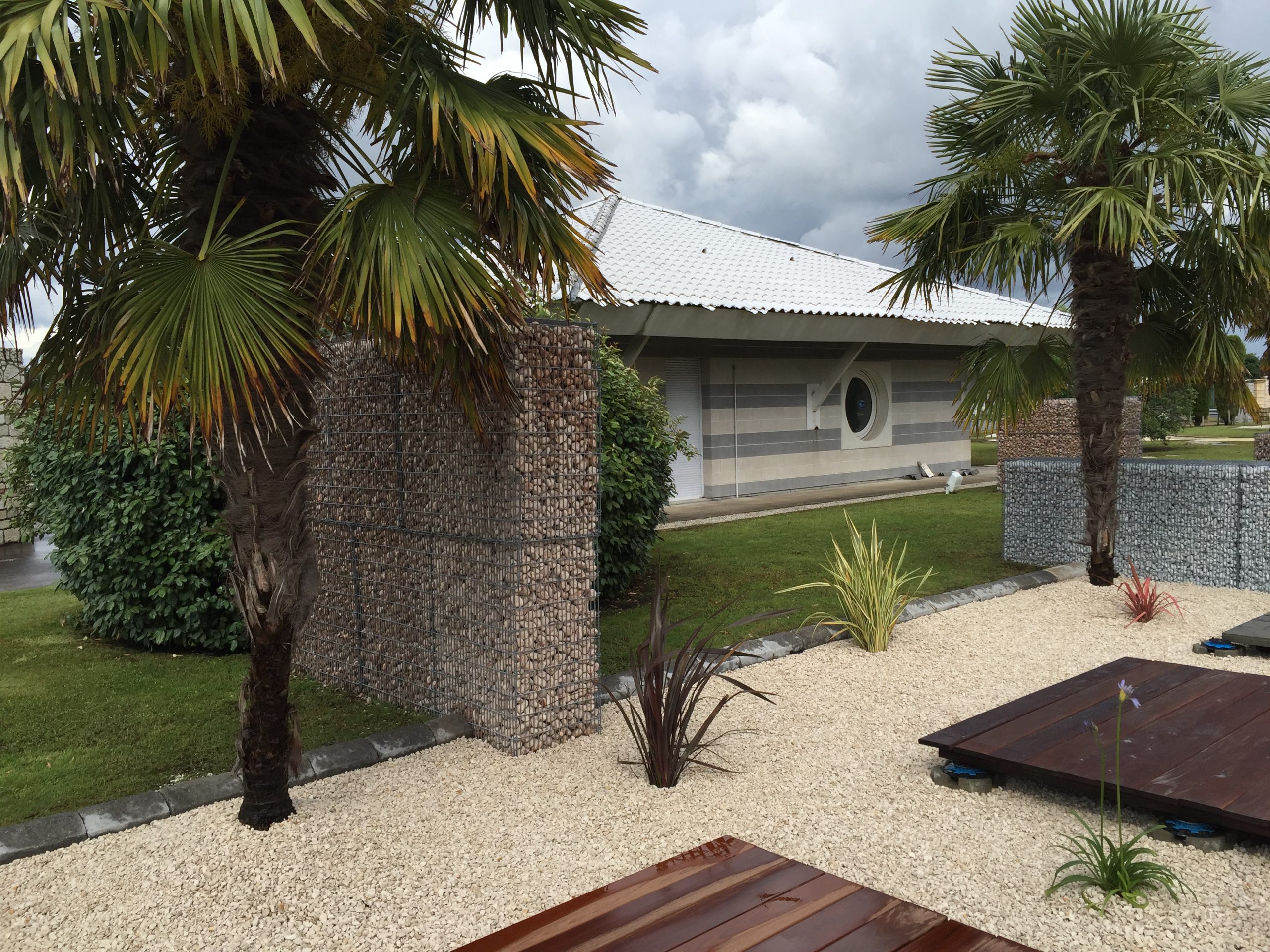
Gabions have traditionally been associated with civil engineering and infrastructure projects, where they have been used for applications such as retaining walls, erosion control and riverbank protection. Increasingly, however, gabions are finding their way into gardens and landscaped spaces, where their combination of strength, practicality and natural appearance makes them an attractive alternative to conventional walls and fencing.
A gabion is, in simple terms, a strong wire mesh cage filled with stone or rock. Once filled, the individual units form a heavy, stable and flexible structure that can adapt to minor ground movement without cracking or failing. In the garden, gabions can be used for much more than retaining soil: they can define spaces, create terraces, provide seating and introduce texture and structure into a landscape.
Strong, Durable and Built to Last
One of the key advantages of gabions is their durability. Quality gabion baskets are manufactured from corrosion-resistant wire, such as Crapal®Premium, providing greater protection against the elements than standard galvanised wire.
The mesh in these gabion kits has a 10 cm × 5 cm opening, providing a strong structure while allowing the stone filling to remain visible. This creates a distinctive combination of engineered structure and natural materials.
Gabions are available in a range of sizes, making them suitable for projects ranging from small decorative garden features to substantial retaining and stabilisation structures.
A Natural Solution for Retaining Walls
Gabions are particularly effective where there is a need to retain soil or create different levels within a garden.
Unlike a conventional solid masonry or concrete wall, a gabion is permeable. Rainwater can pass through the stone-filled structure, significantly reducing the build-up of hydrostatic pressure behind the wall. This excellent drainage performance can also help reduce erosion.
Their flexibility is another important advantage. While a rigid wall can crack if the ground settles or moves, a gabion structure can accommodate a degree of movement while maintaining its overall integrity.
For garden terraces, sloping sites and raised planting areas, this combination of strength, drainage and flexibility makes gabions an increasingly appealing option.